Supporta la fondazione
CLINICAL EXCELLENCE

Fondazione Amiloidosi
PROAmy E.T.S.

Study, research and care of systemic Amyloidosis.
An ongoing commitment to therapeutic innovation and to patients’ wellbeing.

Support Research What are Amyloidoses?
OUR IDENTITY

Scientific Legacy and Civic Commitment

We are a group of people committed to gaining a better understanding of a group of rare diseases — the systemic amyloidoses — and to improving their treatment.

“From this meeting, a partnership was born”

A bond between research, families, and civic commitment that has transformed the path of diagnosis and care.

HISTORY

Carlo Bernasconi, a pioneer of Italian cinema and founder of Medusa Film, passed away in 2001 from severe cardiac amyloidosis that was diagnosed too late. Giampaolo Merlini, a physician and researcher who had been working on the disease since 1986 and founder of the Italian Society for Amyloidosis, was called in for a consultation during the final days of Carlo Bernasconi’s life.

He met the family and Giampaolo Letta, his close collaborator. From this meeting, a partnership was born. It led to initiatives to spread awareness of these diseases and to fundraising campaigns.

PROGRESS

These efforts made it possible to build the clinical center and dedicated research laboratories for the disease at the IRCCS Policlinico San Matteo Foundation in Pavia.

Thanks to its outstanding and dedicated researchers, the Pavia Center quickly became one of the world’s leading institutions for amyloidosis. It has played a major role in developing effective therapies that have transformed the most common forms of systemic amyloidosis — once incurable — into widely treatable conditions, with patients’ life expectancy now approaching that of the healthy population.

“widely treatable conditions”

A result that marks a turning point, but not the end of the journey.

MISSION

Despite these extraordinary advances, about one third of patients still receive a late diagnosis and die within the first year of illness.

The Foundation was established to fund research into new strategies and tools for early diagnosis, to develop more effective and better-tolerated drugs, and to provide support to patients and their families.

Nov 11, 2025

REGISTERED FOUNDATION DATE
Understanding the Disease:
The Therapeutic Revolution

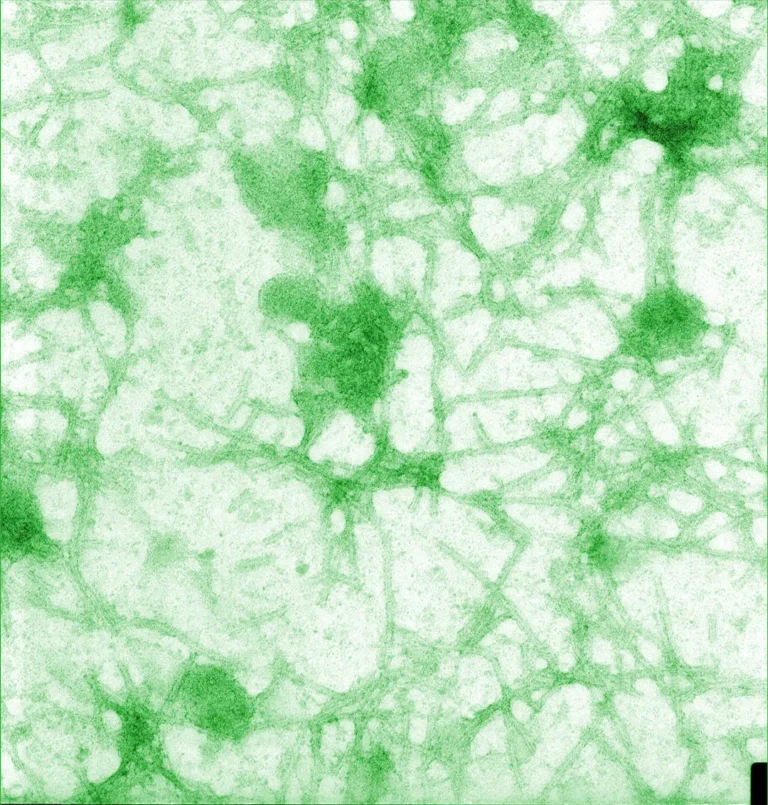
Amyloid Fibrils

Proteins that misfold abnormally, depositing in tissues and compromising the function of vital organs.

SYSTEMIC VS CEREBRAL

We distinguish between the multi-organ impact of systemic amyloidosis and localised cerebral forms.

PHARMACOLOGICAL FRONTIER

The introduction of stabilisers and monoclonal antibodies has radically changed the prognosis.

SCIENTIFIC DOCUMENTATION

What are Amyloidoses?

Amyloidoses are a group of rare diseases characterised by the deposition, in various organs and tissues of the body, of protein aggregates forming structures called amyloid fibrils. A beta-sheet is a protein structure in which segments of amino acid chains align side by side like a pleated sheet of paper, stabilised by chemical bonds that make them rigid and resistant. In amyloid fibrils, these sheets stack on top of each other in a compact arrangement, forming insoluble fibres that accumulate in tissues.

The term “amyloidosis” has a curious history: the physician Rudolf Virchow, in the 19th century, noticed that the deposits he found in diseased tissues stained with the same dyes used for starch (amylum in Latin) from plants — hence the name, which has remained in use to this day even though those deposits were later discovered to be composed of proteins.

Today we know that amyloidogenic proteins — that is, those capable of forming these fibrils — number 43. Each gives rise to a specific type of amyloidosis, with distinct clinical features, affected organs, and therapeutic prospects.

Amyloidoses are divided mainly into two broad categories, depending on whether the amyloid deposits accumulate predominantly in the brain (cerebral amyloidoses) or in other organs such as the heart, kidneys, liver, and nerves (systemic amyloidoses). This distinction is fundamental, as the two forms have different causes, manifest differently, and require completely distinct therapeutic approaches.

The best-known cerebral amyloidosis is Alzheimer’s disease, in which the protein beta-amyloid forms the so-called “senile plaques”, slowly destroying the connections between neurons. Another relevant cerebral form is cerebral amyloid angiopathy (CAA), in which deposits form in the walls of the brain’s blood vessels.

In systemic amyloidoses, deposits form outside the brain: the heart, kidneys, liver, peripheral nervous system, gastrointestinal tract, and soft tissues. Unlike the cerebral forms, systemic amyloidoses are today at the centre of a true therapeutic revolution, with drugs approved in recent years that have radically changed the natural history of these diseases.

Transthyretin (TTR) is a protein produced mainly by the liver, whose primary role is to transport thyroid hormone and vitamin A in the blood. In its normal form, it circulates as a complex of four molecules. Under certain conditions this complex disassembles: the molecules separate, misfold, and begin to aggregate, forming amyloid fibrils.

There are two forms of ATTR. The hereditary form (ATTRv) is caused by a mutation in the transthyretin gene — more than 130 different mutations exist — and typically manifests between the ages of 30 and 70, primarily affecting the peripheral nervous system and/or the heart. The acquired form (ATTRwt), formerly called “senile amyloidosis”, predominantly affects men over 65 and now represents the most common form of cardiac amyloidosis.

On the therapeutic front, tetramer stabiliser drugs (tafamidis, acoramidis) prevent the protein from dissociating, while gene silencers (patisiran, vutrisiran, inotersen, eplontersen) reduce TTR production directly in the liver. Research is rapidly evolving, with gene-editing therapies (CRISPR) aiming to permanently correct the genetic defect with a single administration.

In AL amyloidosis, an abnormal clone of plasma cells overproduces a type of antibody light chain that misfolds and forms fibrils. These defective chains enter the bloodstream and reach target organs, where they exert a toxic effect on cells and deposit as amyloid.

AL amyloidosis is the most severe and rapidly progressing systemic form. Cardiac involvement, present in approximately 70–80% of cases, is the main determinant of prognosis. Renal involvement manifests with massive loss of protein in the urine. Some manifestations are almost pathognomonic of this form: macroglossia (enlargement of the tongue) and spontaneous periorbital ecchymoses, known as “panda eyes”.

The primary goal of treatment is to eliminate the responsible plasma cell clone. Modern regimens are based on a combination of daratumumab, bortezomib, cyclophosphamide, and dexamethasone. The ANDROMEDA trial showed that adding daratumumab triples the rate of deep haematological responses, with a significant impact on survival.

Scientific research is making important strides. New therapies are currently under investigation that could significantly change the treatment outlook for patients with AL amyloidosis.

Among the most promising are CAR-T therapies, which use the patient’s own immune cells, suitably modified, to recognize and eliminate the cells responsible for the disease. Equally exciting are bispecific antibodies, drugs that can direct the body’s natural defenses against diseased cells. The first clinical studies show very encouraging results: in more than 90% of treated cases, the disease-causing cells were eliminated.

A recent study reported that antibodies targeting amyloid fibrils reduce hospitalizations and mortality in patients with AL amyloidosis caused by kappa light chains. This benefit was not observed in patients with lambda light chains.

These advances open the way toward a life expectancy for patients with AL amyloidosis comparable to that of the general population.

Amyloidoses, long considered orphan diseases without therapeutic hope, are today at the centre of one of the most dynamic areas in internal medicine. Understanding the molecular mechanisms underlying fibril formation has opened the way to targeted and innovative pharmacological interventions, transforming the prognosis of many patients.

The most exciting prospects concern gene therapy and genomic editing. For hereditary ATTRv, drugs based on CRISPR-Cas9 have already shown, in the first clinical studies in humans, the ability to reduce TTR levels by more than 90% with a single administration — a result that could translate into a permanent functional cure.

Early diagnosis remains the main challenge: systemic amyloidoses are still often diagnosed late. The development of serum biomarkers and increasingly sensitive imaging techniques is improving early recognition. The complexity of these diseases requires specialised reference centres with multidisciplinary teams, such as the Centre for the Study and Treatment of Amyloidoses at the Policlinico San Matteo in Pavia.

Beyond AL and ATTR amyloidosis, there are rarer systemic forms caused by different proteins. In many cases these are hereditary diseases, and correct diagnosis is fundamental both for the patient and for their family members.

AA amyloidosis develops as a complication of chronic inflammatory diseases (rheumatoid arthritis, Crohn’s disease, tuberculosis) and predominantly affects the kidneys: treatment is based on controlling the underlying inflammatory disease.

Fibrinogen Aα amyloidosis is the most frequent cause of hereditary non-AL renal amyloidosis in Western countries and requires combined liver-kidney transplantation. Apolipoprotein AI amyloidosis can affect the kidneys, liver, heart, and nerves depending on the mutation. Lysozyme amyloidosis is extremely rare — fewer than one hundred families worldwide — with predominantly hepatic involvement. Gelsolin amyloidosis, known as the “Finnish disease”, presents a characteristic triad: corneal opacity, facial muscle paralysis, and sensory neuropathy. Finally, beta-2 microglobulin amyloidosis affects patients on chronic dialysis, with deposits in osteoarticular structures.

Objectives and Activities of the Foundation

Scientific Research

The Foundation funds innovative research projects on amyloidosis, with particular focus on studies that can be rapidly translated into concrete benefits for patients.

Patient and Family Support

It helps care centres improve the reception and assistance of patients, supports the training of healthcare personnel, and promotes a culture of respect and comprehensive attention towards those living with the disease.

Information and Awareness

It organises conferences, training courses, and public initiatives to spread knowledge of amyloidosis among doctors, researchers, and the general public.

Foundation Activities for 2026

For the current year, the Board of Directors of the Foundation has approved the expenditure necessary to establish the Foundation’s website. Furthermore, with the donations received so far, a research grant has been approved for a young cardiologist who will carry out her research activities at the Centre for Research and Treatment of Amyloidosis of the IRCCS Policlinico San Matteo, Pavia.

News & Events

Updates on seminars, conferences, and progress in international scientific research.

DONATIONS

How to Contribute

We are very grateful to those who wish to support our activities.

Donation via PayPal

It costs you nothing. It can change the future of people living with amyloidosis.

Donate your 5×1000

TAX CODE

96089590184

HOW TO DO IT

If you file the 730 form (even the pre-filled version) or the Individual Income Tax Return (Modello Redditi Persone Fisiche), sign in the box "Support for Third Sector organizations" and write the Foundation's tax code: 96089590184.

If you're not required to file a tax return, you can still donate: ask for the 5×1000 form at a post office, a tax assistance center (CAF), or your accountant, and hand it in inside a sealed envelope.

Bank Transfer

BENEFICIARY

FONDAZIONE GIAMPAOLO MERLINI IN RICORDO DI CARLO BERNASCONI PER LO STUDIO E LA CURA DELL AMILOIDOSI ETS

IBAN

IT46L0323901600100000512097

BANK

Intesa Sanpaolo Private Banking

Indirizzo

Viale Cesare Battisti, 16/b - 27100 Pavia, Italia

Tax Receipt

To receive a tax receipt, please include your email address in the bank transfer reference, or write to fondazione.amiloidosi@proamy.com

Tax Deduction

Donors can deduct 30% of the donated amount (or 35% for ODVs) from their taxes, up to €30,000.

For information about donations: fondazione.amiloidosi@proamy.com